





Summary: Flea dirt is actually flea poop that is made up of dried blood. They look like tiny dots (usually black in color) and are a sure sign that fleas are on your pet or around their living areas. They are commonly found on the tummy and on the tail. Fleas need to be dealt with immediately to prevent health risks and you also need to take preventative measures to try and keep fleas away.
Fleas can be difficult to deal with, especially during the warmer months when they are the most active. However, there are a few signs of fleas that you can keep an eye out for if you want to stop a potential flea problem dead in its tracks. One of the biggest give away that your poor pet has a bad case of fleas is the flea dirt that can be found on your dog or cats hair. Lets take a few moments to learn how to properly find it, identify it and work out an effective solution for getting rid of the fleas and their dirt in a safe and thorough manner. If you have questions, please leave a comment below the article and I will get back to you soon asap. 🙂
Flea Dirt Identification – What Is Exactly Is It?
Basically, this type of “dirt” is old blood and feces that is left behind when fleas feed on your pet. This dry blood gives them a “black” appearance on skin or hair. If you touch it, it will feel slightly “grainy”, much like fine sand. Gross I know! They are usually about half a millimeter in length and they leave little marks that are often described as looking like:
- Black pepper
- Tiny Black Dots
- Black Specks
- Dog or cat “dandruff” that is dark in appearance
- Small tar colored “flakes”
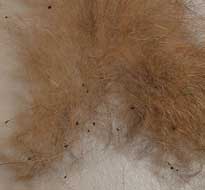
Picture of Flea Dirt 
Regardless of how you see it, if you find something like that on your pet, it definitely deserves some attention. How so? Well flea dirt indicates the presence of fleas. While you may not find any fleas upon first inspection, remember that there may be flea eggs already laid on your pet and secondly, there is a good chance that the flea jumped to safety before you could notice it feeding on your pet. Since fleas pose a health risk to your pet, you need to take action as soon as possible. I will go into more detail on this subject a little later.
Many people have asked how to tell the difference between dirt from fleas and just normal dirt that may be picked up from the garden or surrounding areas. If you have wondered this before, it’s actually a very good question as incorrect diagnosis can potentially cost you money unnecessarily. Also, if you find this dirt, you may also want to invest in a monthly treatment product to keep your pets flea free but please do not use a flea collar for dogs or cats as these can be very dangerous. Products such as Frontline and Advantage are very good and are worth their price tag. Here are a few ways to check if the “dirt” that you see is actually flea excrement:
- Take a paper towel (toilet paper or cotton balls should be fine as well) and put a very small about of water on it. Gently rub your pets fur where you think there may be flea poo and if it appears a reddish brown color (on the paper), its highly likely that its flea poo.
- Another way to check is to do use a comb to brush some of the “dirt” off your dog or cats fur and onto a white surface. Once you have collected a bit, also apply a few drops of water and see if the color changes into the same, red stain from the digested blood.
Remember, if you pets enjoy swimming or live outside, remember that the dirt may look like brown-red streaks that are created from flea waste when it comes into contact with moisture (dew, rain, etc.)
Where Can You Find Flea Dirt?
While fleas are not be too picky about the areas of residence, there are a few places where they are known to congregate. Its in your best interest to know these places so that you have a good idea where to start looking. Here are the steps that I personally follow:
- The first thing I usually do is check for this dirt on my pets on bedding, unless I actually notice the dirt on my dog or cats fur first of course. Remember to use the “water technique” to check if it turns that red brown color. In fact, it’s a good idea to check this area from time to time to see if there is a bigger flea problem waiting to happen. Also, if you see your pet scratching continuously, its very possible that there may already be a flea infestation in the house so try and keep an eye out for this dirt (and signs of fleas) on a weekly basis.
- Secondly, I would spend some time inspecting my dogs and cats fur, regardless of whether I find the dirt in their sleeping areas. I do this by pushing the fur apart to ensure that I don’t miss anything. Sometimes you may even see the fleas, unless there are very few. Pay extra attention to the belly area and on the back of the tail. Other common places include the paws (especially if its an outdoor pet) and under the arms (or technically, its legs).
If You Have Found This Dirt on Your Pet, What Are the Risks?
Despite their size, fleas consume a large amount of blood, especially if there is a large amount of them. While its rather rare and only a result of a terrible flea problem, this can result in anemia. Also, since larvae uses this dried blood to sustain them during their life cycle, its in your best interests to get rid of both the fleas and their dirt as soon as possible.
If you have been bitten or your pets are suffering from a large amount of flea bites, its recommended that you seek professional help.
Is It Possible To Get Flea Dirt But No Fleas?
Yes, it is possible, for two major reasons. Firstly, consider the possibility that what you are seeing is actual dirt, not adult flea poop. Always double check by doing the water and paper test (mentioned earlier in this article). Secondly, if it definitely IS flea poo, but the adult fleas have been killed by a spot on treatment that was applied fairly recently, then you shouldn’t need to worry as the adult fleas are probably gone.
However, if you have not used any flea treatments recently and it is definitely flea excrement, then there must have been fleas on your pet at some stage, which is worth investigating as they are very likely to come back.
What Should You Do Next to Remedy the Situation?
As we have found out so far, learning how to remove flea dirt and fleas requires some work. Its much easier to prevent flea problems then trying to solve them. I presume that you have visited this article because you have a fleas on your pets so lets look at a few things that you can do about it:
- Firstly, give your home a good vacuum and wash any clothes that you think may have come into contact with fleas.
- Next, use a flea spray with an insect growth regulator chemical to stop the flea life cycle. You can use this on your carpets and after checking with your vet, you can even use it in kennels, etc. Here is some more information on good flea treatments for your dogs. I would love to hear your thoughts and you have any questions on this guide, please feel free to contact me 🙂
- Lastly, after giving your pet a good wash with flea shampoo (watch out for the claws and death stares if you have a cat) to kill their adult fleas that may be in their fur, perhaps to hide from your wrath.
WARNING: Despite what you may have read about natural treatments for fleas on the internet, please never use tea tree oil (or any essential oils for that matter) on cats as it can pose a serious health risk. Please see this article on the best way to get rid of fleas on cats for safe tips.
How Does This Knowledge Help With Proactive Flea Control?
Knowing that your pet has flea dirt will help you act quickly before this small problem becomes a major one (such as an infestation in your home). I recommend that you make a habit of checking for this every couple weeks and taking action immediately if you find anything. Here are a few other things that you can do one a regular basis to prevent fleas:
- Groom your pets regularly. Not only will this keep your pet looking good but will also help you to spot the dirt from fleas quickly.
- Wash your pets blankets once a month. Also look for any flea feces.
 I have had a few readers contact me about their cats having a major flea problem. Most of them have told me that there didn’t see any evidence of flea dirt but have confirmed that there definitely were fleas on their pet. This is actually very common because cats are known to lick themselves constantly and most of the time, this gets rid of the flea poop. Simply put, just spend some time looking carefully at your pets skin and fur and if there are fleas or their dirt, you will be sure to find them, provided to put in the effort.
In conclusion, checking for this special type of “dirt” is a great way to check if your pet has or had fleas. Of course, if you actually see the fleas, you don’t need to spend any time looking for the poo but if not, its an indication that you need to take steps to protect and help your dog or cat before the flea problem becomes a big issue. Remember, if your flea problem is too big to manage yourself, simply contact an exterminator to help you. In this guide we have discussed how to identify signs of fleas, where you should look and what you can do about it and I hope that its been informative for you. 🙂

Hello! My name is Natasha, and I have been helping people with their insect problems since 2012. I have published a book, worked with many pest control companies, and helped thousands with various infestations on a one-to-one basis. My goal for this blog is to create evidence-based guides that are easy to understand, provide sufficient depth and can be trusted to be very accurate. Please remember that my guides are for informational purposes only, and that you agree to the terms of use when reading content on this website. If you leave a comment, I typically respond within 48 hours.

I’ve applied spot on frontline. I’ve applied flea powder, I’ve slathered her with coconut oil and combed away many fleas. I’ve bombed the apartment and dusted the carpet but my poor cat still has fleas. I think they are also biting me. I also ordered revolution as her next spot on. I’ve never give her a bath but she runs away from water sprinkles and rain. What else do you recommend? I suppose a professional exterminator is next?
Hi Kyla! Are you doing all these treatments at the same time? If there is a couple days between them, fleas can sometimes escape and this will allow the infestation to rear its ugly head again. I also recommend that you put out a couple DIY flea traps at night, check my article on this topic.
Hi I’ve found flea dirt on my cat I have used flea treatment on her do I need to get rid of the flea dirt or does it go away by its self, thank you.
Hi Nicola! It will eventually fall out, but if you want to speed it up you can just use a flea comb or wash your cat. If you have just used a spot on treatment, wait a few weeks before you wash the cat 🙂
I think my dogs have fleas I have done everything I can’t afford a service is one brand of flea treatment better than the other
Hi Kimberly! I recommend that you give Frontline a try, they are usually pretty good. Hope this helps you, good luck!
Hi,
I heard cedar oil is good to get rid of fleas. I use Nexguard for my Sheltie but I did notice little black spots on his underside. Now that I have read your article I will try to check with a wet rag. He usually has no problem but the vet would not renew prescription without seeing him and it was a week later than I usually give to him. I am hoping it is just dried up specs of dirt.
Hi Sara! I recommend that you just use some dawn soap and some warm water, does a great job of killing fleas (currently on your dog). I have an article on the topic, just go to the fleas category (at the top) and you will find it, it has all the details 🙂
Hi Natasha. I have 5 days all indoor. Somehow my 2 ragdoll and 1 rescue got fleas. The other 2 no sign of them but i treated them all with advantage 2 yesterday. I still see a few alive fleas but mainly just dirt. My questions are: 1. its over 12 hours, will the rest die? 2. Can i give them baths now or will it wash the treatment off? And 3. one seems allergic to the flea as she has tons of red scabs. What can I do?
Hi Kory! It will wash the treatment off, you usually need to wait 3-4 weeks before washing them. In the meantime, make sure that the fleas are not in your home by making a few DIY flea traps (article on this blog). Hope that helps!
Hello! I owe you many, many compliments for the most thorough articles I’ve ever read! I have two indoor cats, so I’m surprised that we may have fleas even though I have never seen one on them or in the house. I think this because they have developed scabs, likely from allergic reactions. I have several questions, but I’ll start with just one. What type of Dawn, specifically, do you recommend for bathing cats to treat fleas? For readers, I came up with a great method of bathing cats a few years ago when I was trying to get rid of ringworm on a farm cat I had taken in (to ultimately become my soulmate, Emma). So lemme know if you need help! Also, for what I have found that may be flea dirt (on my other soulmate, Luna, but not on Emma), I have only found one picture online that looks similar. So, I’m hoping you can provide a better variety of pictures maybe. Ours are spiral and comma shaped (probably broken spirals).
Hi Jennifer! Thanks for your kind words 🙂 RE your question, just choose the cheapest one (seriously), they all will work. If you send me a pic of that I will see if I can help you. Thanks for your comment!
Natasha, okay so I religiously treat my cat with Frontline plus and maybe three weeks ago I gave her a bath because I was still finding flea dandruff on my furniture and bedding. Now I am finding more again after bathing her and blankets and everything I was finding the dirt on. What does this mean the Frontline is not working and she has fleas? I have not been able to physically find any fleas on her it’s just the dirt everywhere. Any info would be helpful.
Hi Nicole! If you cannot find any fleas, try using a flea comb on her. If there are none, you might find that they have jumped off your cat, which in that case you can try making a DIY flea trap. There is an article on this blog (under “fleas” category), check it out and tell me if it helps you.
I have e yr old cat. I believe he has flea poop. Can I treat him or do I need to take him to a Vet? Ty
Hi Kathryn, you can definitely treat him. Start off with cleaning that flea poop off (I know he might object, but try). Once that is done, keep an eye out for its return, which would mean that you probably have a flea problem in your home or garden. Hope that helps!
Hi, thanks for explaining what the flea poo looks like, I have not found one flea on my dog but plenty of the poo, and I don’t know how to get rid of it
Hi Wendy! It is a pleasure, just a wash in some warm water (with a little natural soap) will do the trick. If it returns, it means that you have fleas in your home or yard, so let me know if that happens.
I have a 7 month old kitten that i took In and tonight when getting home from work I knowticed she has a small round scab inbetwren her shoulferblades. Eight at the bottom of the back of her neck. I don’t see any hair loss yet and I’m not sure what could have caused rhat she Is an indoor only kitten and I have her on a healthy dies. She doesn’t get any foods with byproduct. She did have fleas when I got her but I have given her a couple flea treatments I believe advantage and she has had. A few baths. She hasn’t gotten any treatments or baths in a month or 2 tho. And she has been treated for tapeworm. Maybe I am over thinking the scab it’s just in such a wierd place I will deffinitly be watching it but In the mean time what should I do ? It doesn’t seem to be bothering her. It’s bothering me more then anything.
Hi Renee! I think you are overthinking it a little bit, but it never hurts to be extra careful. It has been a little while (sorry for the delayed response), has it disappeared or is the scab still there?
Hello, my name is Lisa, I am still undecided as to whether my dog has flea dirt . She has a hard small dark crusty patch on the inside corner of each ear. It will not rub off. I actually can pull it off with tweezers which will leave the skin raw. It won’t bleed. But it comes right back the next day. Could this be flea dirt?
Hi Lisa! Doesn’t sound like it to be honest, but it could be as a result of flea bites. I have an article on flea bites, check it out and let me know if it helps.
Great find! Very informative.
Thank you Sam 🙂
Hi. I treat my dog with Advantage Multi. Still I found flee droppings to day and cannot wash him for 72 hours. I do not see fleas. Is there anything I can do now?
Hi Colleen! The spot on will not remove the flea droppings, they could just be there from the fleas that used to be alive. Just keep an eye out for any live fleas.
I have 3 small dogs. The smallest is all white, so I easily found some flea dirt and 5 fleas. The other two dogs seem fine. Does that seem feasible??? They all gets baths frequently.
Hi Ann! That is strange, but I recommend that you apply a spot on treatment to the one that has fleas. Should be all you need, let me know if you are still battling with them after a week or two.
Hi Natasha!
Thanks so much for posting this. I have a puggle who my fiancé is concerned has fleas. She believes she has brought them in to the house but I have never seen any and feel like she may be paranoid. She keeps taking a wet paper towel into the dog crate and finds small specks that do turn a redder tint but I have seen no signs on her of any fleas. We took her to the groomer and had her shaved and still haven’t seen anything other than she scratches herself but that has always been the case. What are your thoughts? Thanks. -Ward
Hi Ward, if the groomer cannot find any fleas (or you), then it’s safe to say that something else must be causing your dog to scratch, likely a skin allergy 🙂
Hi your article is really informative thank you.
I have a question though,: I am finding black bits which are a little bit like soot however they are much larger than sprinkled pepper size…… do you have any idea what they can be??
Most grateful.
Hi Susan, could be flea poop, have you tried adding a little water to them (on some white paper) and seeing if there is a reddish color?
Hi Natasha: have just noticed the grainy material on one of my cats, but the weird thing is, being that he’s around 25lbs. (got Maine Coon in him, plus he’s just plain big), I had just increased the dosage of his Advantage from 8 to 12ml. And it wasn’t until I did this increase of Advantage that I actually began to see any indicator of fleas on him; before that, he appeared flea-free. Your thoughts? Thank you.
Hi Kurt, I think it was just coincidence honestly. Look for flea dirt, put it on a white towel with a little water and if it turns red, then maybe he doesn’t have a flea problem 🙂
Hi Natasha,
When trying to test dirt for being flea dirt, do you need to rub at the dirt once the water is on, or will just dripping it onto the dirt automatically make it turn reddish brown?
I’ve found ONE live flea on one of my cats using a flea comb and have been treating both with Revolution and vacuuming and spraying the cat version of Vet’s Best on the carpets/furniture and using a flea comb, but I’ve only ever found the one. I feel like I’m doing it wrong, but that might just be paranoia.
Thanks,
Heather
Hi Heather, you may need to rub it a bit 🙂 Let me know how that goes!
Hi . My 7 (almost 8)yr old Beagle had a scab like area on his neck . I did the flea comb and the scab came iced . It was not grainy like mentioned but actually like a real human scab. I dropped water onto the two pieces and their was no change in the color. He is on a monthly deer and tick treatment plan . He does scratch a little bit he always has and the vet says it’s just his nature . Do I need to worry about it being a flea infestation ? I also found a tick falling off him about a week before we noticed the scab. He had the Lyme vaccine as well .
Hi JW, doesn’t sound like you need to worry. I would just keep an eye on the situation, as soon as you start seeing an increase in fleas, take action.
I just found a 4 wk old kitten and would love to be able to help it or even keep it for my kids, but am worried about any disease that it may have being out in the wild. I washed her a little, but while washing her I saw all kinds of black dots on her fur amd was not able to get them off. They only come off with the fur so am not sure if it is the flea poo or not. Could you please help me to figure out what to do so I do not have to let her go and know that she is going to die without her mom.
Hi Christine! That is very decent of you to take the little kitten in 🙂 You don’t need to worry about diseases honestly, especially at that age. By the sounds of it, is probably tree resin or something like that, doesn’t sound like flea dirt. I recommend that you just groom the little kitty, feed it well and it will be fine, trust me, I also took in a little street cat a couple years ago.
Hi there! My Chihuahua had fleas and she has had the flea tablet which did kill them however, I am still finding flea poop in her fur. Can the poop hatch into fleas?
Thank You!
Hi there, if there are eggs present, that is the only way that the flea cycle will continue. I suggest you give her a bath and that should sort things out.
Hi Natasha!
My dog has not shown any sign of flea infestation, however we have discovered an area on his tail (approx. 3-4″ from his hind end) that has a spot the size of a quarter of what appears to be dried blood. I bathed him ,with much attention on the area, but only some of the “scab” came off. If it is flea dirt does it come concentrated in one spot like that or is it just scattered specs? (which I don’t really see anywhere else) Therefore, I am wondering if he may have suffered a trauma to his tail or if he may have fleas.
Hi Barb! Yes, it is often concentrated in certain areas. Best test is to put some of the “dirt” on some white paper and apply a little warm water, does it turn a little red? Then its definitely flea dirt, give it a try.
This might ne a stupid question. My cats and dog all have fleas atm and I’m in the midst of washing everything, cleaning and getting every tx I can for home and them. Since I found out about them I constantly have a feeling that I am being crawled on. You’d know if you had gotten bitten, correct? I know it’s just me being scared makes me feel like that, but how do you know if you get bitten?
Thank you!
Hi Ang! A simple shower (with soap) will kill them all, so it is unlikely that you have fleas living on you. Next time you feel it, inspect your body and your clothes. If you see nothing, it is likely that it’s in your mind. Hope that helps.
What is a flea trap? I’ve never heard of them before. Anyway, my cat seems to be covered in flea dirt but there are absolutely no signs of fleas. I’m going to try your white paper for blood trick (also no signs of bedbugs) that sounds like a great idea! Does flea dirt have a hard feel to it? One more question, on the box of the monthly flea treatment that I’m going to use on her, it says it also kills “chewing lice”, what in the world is that? Thanks for the coming answers, I loved reading all of your advice.
Hi Vickie! It can have a hard feel, give it a try! Chewing lice are an external bug that can munch on your pet, not pretty at all hehe. Hope that helps!
I just bathed my year old rescued chihuahua and black stuff sloughed off in sink almost looked like black fuzz. Lots of it? He’s not itchy. He happy as can be so I can’t imagine what it it. It was all over his body on the back? I’ve had him since oct so this is new? I have 3 dogs and have never seen this?
Hi Joy! Hmm it might have just been dirt, unless it has a reddish color? I wouldn’t worry to much but let me know about the color.
Hello, I have a 6 week saint Bernard that I rescued. He was depressed so I let him interact a little with outside dogs. Now I see flea dirt on him im sad and scared because he is just 6 weeks. Help!
Hi Ivy! Just wash him in warm water and dawn soap, kills fleas instantly. If he keeps catching them however, use a decent spot on treatment. Hope that helps!
My Pom had the black dirt on her tons of it but this whole year I may have seen 5 fleas , gave her a bath and the water turn reddish brown is that from fleas . Thank you
Hi Sheri, certainly sounds like it. Maybe investigate around their sleeping area for signs of the insects.
Great info. My little Yorkie has had fleas a month ago. She had and still does have flea dirt nest. I put NexGard on her about 3 wks ago. I just looked at her belly which has new nest. She was bathed a wk ago. Not time for NexGard to expire. Why the new flea dirt nest? They are at several new places.
Hi Darla, it might be time to try another brand of spot on treatment, I have seen it happen before. Give that a try!
Hi Natasha
I have recently taken in a homeless rag doll with lots of long fur and he infested my house. I treated him straight away with advocate and indorexed the house and two weeks later he had fleas again and I had another infestation. A month has just passed and I’ve treated him again but the vet nurse said that as he has long fur , the first treatment may not have worked. I had to leave him outside while the second lot took effect and now I’m worried as I’m still seeing flea dirt on him . I’m at my wits end as I’ve got a huge amount of painful bites.
Any advice please ?
Thanks
Amanda
Hi Amanda, maybe try this. Wash him (careful of claws) with water and dawn soap, then once he is super dry, apply the spot on (it must hit the skin, not sit on the fur usually). Let me know how that goes!
Hi Natasha
I have a mixed Pomeranian and Chihuahua. She does have please and I give her a bath weekly
However, right after o do the next day she is scratch on again. And she really smells under her arm pits. Someone told me that could come from fleas and they told me to get some type of flea collar. I have used all of the gels that you supposed to put on dogs and they do not work. She stays indoor unless she has to go to bathroom. And her breath also smells. She continuously licks her back near the tail where the flea dirt is. ease help.
Hi Dawn, please don’t use a flea collar, they are dangerous. I suggest that you give it a wash, then apply a good spot on treatment like Frontline. That should be all you need, good luck!
First of all, I’m relieved to see that you are still replying to comments on this even though it’s a bit old. I’ve just discovered that one of my cats has a large amount of flea dirt on him. I try to brush him regularly, but he’s weird and hates being brushed so I probably don’t do it as much as I should (and I definitely don’t brush near his tailbone as much because he’s goes into that weird cat tizzy and wants to groom me at the same time and it drives me nuts.. I sound like a horrible cat owner). The biggest problem with him is that he’s a fatty and can’t reach the area on his back near his tail bone to clean himself properly back there and that’s where I found most of it. I’ve tried to brush most of it out, but there’s still some in there. I’m going to get a flea comb this weekend so I can give him a good thorough check before I subject him to an actual flea bath.. my question is, will the flea comb help get rid of the dirt as well? Also, does a large build up indicate a more major flea problem or is it possible that I let the dirt get out of hand by not brushing him enough? Bathing him is not a fun experience for anyone, so I’d like to avoid that if at all possible. In the past, we’ve done very well in getting rid of fleas by using the flea spray on his favorite sleeping spots and using advantage on him and I’m hoping this is all I need to do in the case, but the amount of flea dirt I found has me a bit worried.
Hi Elizabeth. I will always reply to my comments 🙂 Yes, the flea comb should remove that as well. It doesn’t necessarily mean a large infestation, might just have been a flea issue for awhile as you suggested. Let me know how everything goes, I am sure it will work out. Good luck, please share this post on Facebook if you appreciated my help.
Thank you! The flea comb definitely helped get rid of a lot of it. I also used the suggestion I saw from you and other readers that commented here to use warm water and dish soap. I found if I use a wet wash cloth instead of putting him in the actual bathtub, he’s much more receptive to water and being cleaned. It’s worked wonders. I did find a couple of fleas while combing him, but nothing that made me feel like we have a huge infestation like I was afraid of. Thank goodness we don’t have carpet in most of our house. We’ve now sprayed down any areas that we feel like fleas could be hiding, plus I’ve gotten rid of most of the flea dirt using the flea comb and dish soap and he’s been given a dosage of advantage. So glad I found this blog! I’ve already shared with a few of my friends (especially pet owners) who are having various bug issues.
Hi Elizabeth! Excellent, I am very happy that you have had some success and I SUPER appreciate you sharing my stuff. Many people don’t realize just how important it is for bloggers to get shares on their articles, it helps me so much. Have a good one!
So it seems as though my dog suffers from flea “dirt”…her bedding looks as though it has blood splotches in it. I haven’t done the wet cloth test because it’s not black…
Am I right?
Hi Carly! Goodness, flea bites don’t cause open wounds but your dog might have scratched it so much that it bled. Either way, check if the dirt is “flea dirt” and sort out the flea problem asap. Good luck, please share this post on Facebook if you appreciated my help.
Hi Natasha!
I found your article when I searched on what flea dirt looks like because I am trying to figure out if it’s dirt or flea dirt on my dog. I applied the flea tick medication today on the base of the back of her neck today. When I got home after a full day at work (she was in her crate) and feeding her and letting her outside, I noticed there was dirt where the medication was applied. I also noticed this last month. I’m having trouble deciphering if this is dirt or flea dirt. I took some off and put on a wet paper towel and nothing turned red. I bought a flea comb and added water to what I took off and nothing turned red. I’m noticing that more comes back in the same spot once I remove what was there. Not sure if this proves it’s dirt or flea dirt. I used the comb on the base on her tail and I can’t quite tell if I got some eggs or not. I don’t want to go all crazy if this isn’t fleas but I also don’t want to do nothing if it is. Thanks!
Hi Heather! That is strange, are you sure it’s not just regular dirt? I recommend that you use the flea comb to look for at least a couple fleas and then if you find any, then you can proceed with your flea treatment. Let me know, I will help you. Good luck, please share this post on Facebook if you appreciated my response.
I haven’t seen fleas on my dog but I have seen some things that look like flea dirt, when I squished them it didn’t resemble feces but more like a scab… it was all only in a one inch patch on her back…. and we’re oval shaped and brown… should I do a flea shampoo treat an anyways?
Hi Liz! If you havn’t seen fleas, rather keep away from the flea shampoo. I recommend taking your dog to the vet to have that checked out.
hi i found like some one shook pepper on my dogs back,,, i done the flea test and it didn’t change color or anything but it dont look like dirt ,, what could it be ,, a kin condition maybe ,,,,,, is it safe to use tree tee oil on a dog
Hi Phyllis! It is safe in very low dilutions but rather just use warm soapy water, it kills them instantly. Good luck!
Hi,
We had fleas and have been treated twice. We do not have any pets but went to a doggy park with a friend this past summer. I do not see amything jumping. Vaccum every day. The only think is that I am seeing these little black specs. Don’t know if it is dirt. I do pick them up with a paper toweling that is wet. I does not change color. I feel like I am loosing my mind maybe just noticing it more. Showed the exterminator and he said he did not think it was anything.
Hi Lorraine! If it doesn’t change color, it is probably just regular dirt. I suggest that you use a flea comb and see if it catches anything. If it does, then we can take action.
Excellent article! When you mentioned the tarry, reddish color of what I now know as flea poop or dirt, it was like Eureka! My Australian shepherd has this in places on her skin. I’ve never seen a flea on her, but the evidence is there – scratching, chewing, licking, hot spots, and now I see the flea poop. I put Advantage on her, but it hasn’t kicked in yet. even after a few days. My plan is to wash “everything” and vacuum like crazy. In the past, I’ve been so confused as to whether or not she is allergic to the environment, i.e. grass, pollen, dust mites, etc. or fleas. I’m so glad I came across your article!
Hi Elizabeth! It is a pleasure, thanks for your kind words. I love to help, hope you come right! Please share this article with your friends 🙂
Hi,
Great article!
I have just found out my 2 cats have fleas. The reason I found out was, I found quite a lot of flea dirt in my two children bedrooms on their white bed sheets as this is where the cats sleep. I have started spot on cat flea treatment for the cats on Monday and washed all my children’s bedding and hoovered the whole house and I plan to do the hoovering daily. I also bathed the cats last night in dish soap but it was very rushed because they freaked out. I have also been brushing the cats and found 2 fleas on one (she has short coat) and about 4 fleas on the other (She has a thick coat). Will I have lots of flea eggs in my home and do you think it best to do a house treatment as well?
I would say the flea dirt has been falling of the cats since about Saturday does that mean the cat has had the fleas for a while?
Hi Lorraine! I honestly don’t think it’s necessary to do a house treatment, not with the very little fleas you found. Just keep an eye out, if you find them popping up, then proceed with the treatment. Just want to save you some money hehe. Hope that helps, please share this article with your friends 🙂
Hi. How common are flea bites on humans and what do they look like? Also, can you see them on your bed?
Thank you!
Hi S Pee! Very common, usually they won’t show on the bed though but rather, appear as red marks on the skin. Hope that helps!
Hi there,
Unfortunately I found fleas/dirt on my dog. I applied a topical solution right away (one that I had from the vet) I would just like to know your advice on getting rid of the dirt- does it have to be a flea shampoo or just a regular pet shampoo. The solution from the vet is very strong and works very fast, and I want to get him cleaned up from the dirt but don’t want to put more harsh chemicals on him then I need to!
Hi Amanda! You can just use warm water and a gentle soap (such as dawn) will work.
Hi thank you so much for this article but I was wonder I just got a kitten from the shelter and they say they give them flea baths as soon and they get to the shelter but she still has already t of these black spots up her spine area, even after a bath can the dirt still stay behind?
Hi Carmella, glad you liked the article! It is possible but I recommend you inspect the kitten closely for fleas, just to be on the safe side. Hope that helps!
Hi. I take care of a sweet feral cat. She lives outside and this year I applied Frontline to her, since she is distracted when she is eating and I was able to get it on her. I noticed since the applications that she has several small, round grayish hard balls attached to her fur. I pull them off when she lets me. Some are directly on her skin. What could they be?
Hi Linda! No idea, please can you send me a link to a picture and I can maybe help you out?
Hello there Natasha!
My yorkie has fleas and I’m getting rid of them, however I can’t seem to shampoo the flea dirt off of my poor Sophie it’s like stained on her skin. How can I clean her?
Hi Eli, try using dawn soap and warm water, should do the trick.
Hi, I rescued a pup from a shelter two days ago. I’ve been finding small patches of black and haven’t gotten to do the towel test. Yesterday we found two on her but nothing major. Also, I can’t tell if the dirt is from fleas or normal dirt. Her past foster family said previously she had fleas but they were treated and taken care of. She’s been rid of them for a while now they said. She isn’t on any flea prevention because I’ve just gotten her and my vet hasn’t been open. Do you think I’m being paranoid or is it fleas??? Please help! I’m taking her to the vet today!
Hey Heather, do the test in this article. If the “dirt” goes reddish, then it is probably from fleas and not just “regular dirt”. If that is the case, wash your pup in warm water and dawn soap to kill all fleas. If he gets them again, then the fleas are either in your home or in the garden. Hope that helps!
Good Article Natasha!
Thank you Cheline!
Hi.
I’m worried about my dog having fleas. My partner and I have both looked through her fur and used a flea comb and didn’t find anything. I gave her a bath and also didn’t see any evidence. She’s not scratching or licking any more than usual. I bought her a dog flea collar a few days ago and put that on her. Yesterday we went to the beach and this morning I’ve seen dark spots on her belly (possibly goes droppings?) so I gathered some on a damp tissue to test but they didn’t change colour or develop a red halo. No one in our house has any bite marks of anything like that either. I’m 8 months pregnant and my partner says I’m being very paranoid for no reason, but I can’t get it out of my head! I’m thinking of booking her in for a full health check with the vet – would that determine for sure whether or not we have a problem?
Thanks
Hey Lorna, the dark spots could just be dirt. Honestly, if there are no evidence of them, it might be a little waste of money. But if it gives you peace of mind, then do it.
Hi Natasha,
Thank you this was helpful. Both my dogs had flea dirt so I washed them and gave them advantage. I vacuumed as well. However I’m still concerned and worried that they are in my house. How safe is the insect spray you recommended? I don’t have carpet so where do I spray it ?
Hi Carla, most insect sprays will contain some sort of chemical, which isn’t necessarily terrible but I recommend that you try out my flea traps (DIY article on this blog) if you want to check if there are fleas in your home instead.
Hi Natasha, yeah I think that’s a better idea. Wow I’ve never heard of flea traps lol. So do you put one in each room? or what do you recommend? Also once a dog gets fleas how many days does it take for flea poop to appear?
Thank you!
Hi Carla, yeah that is what I do. There is no set duration, it is whenever the fleas do their business hehe. Hope that helps!
Hello,
My dog’s coat is very thick.How do I get rid of the blackdots .I am going to treat her with fronline that kills the fleas and eggs ,If the black is let is that detrimemtal to the dog?
Thanks,
Bill
Hi Bill, try washing your dog in dawn soap and warm water, it works fantastically. Let me know how it goes!
I hope you’re still reading this. We found a flea dirt on our cats so we gave them a bath and found one flea on one and nothing on the other. We also had the house professionally treated and the cats just came home. The one who didn’t reveal any fleas during the bath was sleeping on my bed tonight and left flea dirt. I did the test and it’s definitely flea dirt. So what do I do? I don’t want to go through the whole process of exterminating again. We’ve vacuumed the house 3 times in the last 24 hours and will continue to vacuum once a day like the pest control said for 10 days. HELP!!!
Hi Madeleine, of course I am hehe 🙂 I suggest that you give your cats another bath and then after they are dry, use a spot on. Then, use my DIY flea traps (guide on this blog) to see if you have a flea problem in your home, if you do, let me know.
Hey, thank you so much!I have finally found out what It was no him!
Hi Nacy! It is a pleasure, be sure to share this with your friends!
Thank you for this helpful information. I adopted a stray cat and have discovered I have a cat with fleas and am sure my house is now full of fleas.
I had wondered why so much dirt on the cat and now know it is flea dirt. I will follow all your suggestions and hope I can rid the cat and my house of fleas.
Hi Virginia, excellent, I wish you the best of luck!
I have several dogs and I have flea poop on their stomach/groin area. Flea shampoos aren’t removing it. I have used several brands. They have been treated repeatedly but I still seem to have the fleas return. Is there a good product for cleaning the skin of flea poop/dirt. The best product I have found for flea control is “revolution” topical. Any advice would be helpful.
Hi Linda, just soak the dog in warm water and use something like dawn soap and it will all come out. Good luck!
I have 3 indoor cats. I treated them all twice, just before Christmas, for fleas. The next week they were all scratching as usually, especially around the ears and head. I don’t see too much dirt in their ears. Certainly black specs under where they sleep.
Thanks.
Hi Grace, your home probably has a bit of an infestation and the cats are simply being reinfected.
I have noticed what I think is flea poo on my white sheets and on counters. My cat is on advantage and also an inside cat.l have not ever found live fleas on him or in the condo, can it be something else?
Yes it could be a lot of other things, I suggest you make a flea trap (guide on this blog) to see if you have a flea problem
My dog has black areas all over his back (toy poodle) never have seen fleas. I took him to a vet and he said it was cysts. After much research I don’t think it is. Has odor also. Took him to a new groomer then noticed the areas. Any ideas? Appreciate any help.
Hi Pat, if you apply a little water to it on a white tissue, does it have a reddish look to it? If it does, it is probably flea dirt 🙂
Hi Natasha, I have already done the flee test and it seems that it is flee dirt, so far it is not too bad byt still ourncat sleeps in our bed. Could you please advise me what to do? What treatment should I buy to prevent flee dirt. He had some at his chin, so I washed it like 4 times a week in it is gone now, byt still he has some flee dirt on his body, so I can’t bath him so often, please help
Hi Guoda, after washing him, you need to kill the fleas in your home. Let me know if you plan to do it yourself or if you want an exterminator in your local area to help you out, will send you more info.
Hi Natasha,Your site is by far the best one I have read yet. We have two cats (brother and sister) who were feral. We took them in because there was no where available to take in any more cats due to over-population. We had them spayed and neutered. After several months of gently gaining their trust I was able to lift them up and they would lie on my lap just loving being petted. That is when I started checking for fleas which they do have. I pick them out and only now see a few left. Thank Goodness I read your info because I had flea collars on both Leonard and Penny. Can I ask you why flea collars would be a danger to our cats? Anyway, I will pass your site on to anyone who wants to know more on flea dirt and fleas. Kudos to you on your very informative site. Thank You so much for your help, Natasha 🙂
Hi Deanna! Thanks for your kind words 🙂 Flea collars are bad for a number of reasons but instead of listing them here, check my article on the subject, I have written a large guide on it.
hi, I have a question
I found 1 flea on my dog, caught it, and killed it, and gave my dog a bath and put advantage drops on him, and he is still scratching and have what appears to me like dirt spots, and has a red sore spot on his neck , which I assume is from scratching,, but ive checked him over and over again, I cant find anything, what should I do?
Hi Stephanie, make sure that you part his fur and investigate under good lighting, fleas can sometimes he hard to spot. If you still don’t find anything, don’t stress about it, just keep an eye on the situation.
I have 2 dogs and they both have been treated with K9 advantix11 and advantage multi. They both started the program in June before this they were using a different flea program, (and have never had fleas one dog is 8 and the other is 12) they are on flea program year round as we travel to Florida for winters and bring our pets. They both have had fleas for 3 months now. We have tried getting assistance from bayer and have been getting no relief from the fleas, they keep,telling me there product works. I have sprayed my home and my yard twice and have done Bayers protocols with no luck. Bayer keeps blaming our flea issue with the fact that our one dog went to the groomers in May. We never got the fleas until July so that is complete nonsense, how can a grooming of my dog in May have anything to do with my starting there product in June and getting fleas in July. These fleas have stressed my small dog to the point that he now has health issues that require him to be on special food for the rest of his life….he was in perfect health in May when he was prescribed this flea prevention. I am desperate for a solution to this flea problem as my dogs health has deteriorated to the point where he is getting weaker and weaker, I am extremely upset as my pets mean the world to me. We have been told to keep doing this and then that, but none of there protocols have been working. I was even told by Bayer to bring my dogs to the vets to have there product put on as we mustn’t be doing it right, we have been using other products for years without getting fleas….I am not an idiot I can open there tube and put it on my dog the same way the vets office did. Any help you can give me would be appreciated I only want my healthy happy dog back again. It is very hard to watch your loved one suffering continuously when you have been a responsible pet owner, purchased product in good faith to keep your dog healthy and this is what happens.
Hi Joyce! I suggest you try another spot on brand, you probably find that those fleas are fairly resistant to it. Give revolution a try and I also recommend that you get your home treated, since its possible that that is why your doggie keeps on getting infected by fleas.
Hi Natasha,
Thanks gorgeous is very informative article. I found a flea (or two) on my dog today. Combed him completely through and found no flea dirt. I do check him regularly, and immediately gave him a bath and treated frontline. Will begin to treat the whole house, but since I haven’t found any flea dirt is it likely that I caught it early? Thanks!
Hi Allyson! I wouldn’t worry about treating the whole house, just keep a lookout for fleas and then take action. 🙂
Hi Natasha, great post! I have a question, my 2 dogs both had a case of fleas. I gave them flea baths, treated them with Frontline, sprayed my house with a spray I got from the vet, and vacuumed multiple times. 2 weeks later, the dogs aren’t nearly as itchy as they were, and I haven’t found any fleas or flea dirt on them. However my concern is, I’ve caught a couple fleas crawling around the house this past week. I know they’re fleas because they’re impossible to kill! So my worry is, the fact that I’ve still seen them around the house, can I assume they’re still living on the dogs do you think? Do I spray the house again? I will treat the dogs again with the Frontline when the 30 days come, but just not sure what to think about the fleas I’ve seen in the house! Thanks in advance!
JD
Hi JD! Yes, use the spot on again and use a flea trap to catch the last few fleas in the house. I have an article on it on this blog. Good luck!
Hi, I noticed that my puppy has the black droppings on him this morning which I was surprised at as I have treated him for fleas on the 11 th of August with flea treatment from my vets.I buy the treatment every 2 months from them and apply it the same day so I know exactly when I put it on him and when he’s next due.the thing is what can I use now as he’s not due for more from the vets until the 11 th of November!
Hi Cheryl! Maybe its time to try another brand of spot on, sometimes the fleas can become resistant.
Hi I have just bought a kitten a few days ago she is 12 weeks old and today we found some small black dots on her bed so I tested them with water and the dots turntable red and she is always grooming herself she haas been all around the house and come into contact with everything.how do I get rid of the fleas what about the house and are flea dangerous to people
Hi Katie! They are just an irritation, that’s all. I suggest that you use a DIY flea trap (article is on this blog) and a spot on that’s specifically made for kittens.
I left several messages on this site and my post has not appeared. I have 3 cats that do not go outside. I treated them with front line a month ago and now treated them with revolution. I see what appears to be flea dirt. But when I do the water test on it. It doesn’t turn brown or red. I would really hate to have to start this whole process if I don’t have a flea problem. I have tile and laminate flooring throughout my apartment. I was told to steam clean then spray and wait a few hours and then steam clean again. Please help.
Hi Lexi! Not sure why your messages didn’t appear, I answer all of them that come through. My suggestion is to use a flea comb and actually see if you cat has fleas. If it does, then take the necessary steps to kill them. Let me know what you find.
I noticed no one mentioned this but people with compromise immune system can get sick from some bacteria fleas produce I got a cat named simba I had my spleen removed so I am one with a compromised immune system but I love my cat simba I used all techniques I read to identify fleas and destroy them I think if you cautious carfull groom ur cat or dog even with a compromised immune system you can be safe from fleas just gota follow precautions
Hi Steven, thanks for sharing your insight, much appreciated!
A good technique for getting rid of fleas is to use Dawn! Not many people know of this, but it works and its better than going the vet and paying 100s when you can buy the soap for less than 5!
What you do is before you wet your dog, you put dawn dish soap on your dogs anus (fleas like to hide in the sphincter!) And around the ears because ethe RN there as well. Then, you want to scrub and work more Dawn into your dogs for. *MAKE SURE YOUR DOG IS NOT WET YET* the viscosity of the soap is what will trap the fleas and ultimately kill them. Once you have lathered your dog, then you may proceed and start your shower. My mom just got a puppy and he had fleas so when we’re rinsed, we used luke-warm water. I’m not sure if you can make it hotter if your dog is older but if you do, make sure it won’t burn your dog. Finally, once you’re done rinsing and scrubbing your dog clean, you can blow dry your dog to fluffy cleanes!
Hi Joy! Thanks for your contribution to the community!
Does their fur need to be wet to use flea comb or do you comb dry?
Hi Helen! I comb it dry but wet would work as well.
Hi there. This article was very informative by the way but I have a question. My cat has really bad flea dirt and she does have fleas (she’s had them for awhile) and they seem to go away for a bit after we give her flea meds but the flea dirt hardly ever goes away. It makes such a gross, big mess. I bath her often enough with flea shampoo but it doesn’t do anything to make the flea dirt go away. It just progressively adds up. What can I do/bath her with to make sure it gets rid of all, or at least most, of the flea dirt? Nothing seems to be working. Thank you (:
Hi Rachel! Try using dawn soap in warm water, works really well.
My dog has the flea dirt and his legs look dark and he goes to groomer once mouth have not seen enything fleas how do I tell it from bedbugs
Hi Rjonda! Are you being bitten? If you can’t find any fleas or bed bugs and you are not being bitten, perhaps its just literal dirt? Let me know, would love to help you!
hi, my small dog is almost being invaded near his stomach area full of flea dirt and i have no idea how to remove the flea dirt. i have tried spraying his bedding areas and spraying his toys to remove fleas, but some how it doesn’t work PLEASE HELP. My dog is allergic to fleas. how would i remove the fleas and flea dirt?
Hi Julia! Try giving your small dog a good wash with some lemon based dish soap. It kills fleas really quickly and will also get rid of the dirt.
Hi–Years ago I learned a trick with those flea collars that seems to work well. No, I DON’T use them on my pets, but if you cut off a 2 1/2″ strip and put it in your vacuum cleaner bag, it will kill the fleas and flea eggs that you vacuum up. I think it only works in vacuum cleaners that use bags, though. I don’t know how it could work in a bagless one, since they are emptied so frequently. You need to let the fleas spend enough time in the bag that the chemicals in the flea collar can work. Also, it’s not so easy for them to escape from a bag.
Hi Margaret! Thanks for the lovely suggestion!
hi my cat is experiencing a bad allergy to fleas I have been treating her more than once a month with advantage- vacuum daily she’s experiencing such problems back near her tail its like embedded flea dirt in her skin-any suggestions? she will allow me to rub her up to her lower back and then its just too uncomfortable I have a flea comb but can’t get near the area of concern. is it true I can bathe her in sunlight dish soap?
Hey Laurie! Yes you can, just make sure it has real lemon in it. Good luck!
Hi! How long does flea dirt stay on dogs after your pet has been treated? Does it do away immediately?
Hey! It depends on what you treated your pet with? Did you use a spot on treatment or did you give them a wash, etc? If you did the latter, it should all come off immediately otherwise it will slowly disappear over a couple weeks.
Does anyone know how to get rid of flee dirt on pups. I’ve found little clumps of flee dirt and while some of it is loose some of it feels like little scabs on their skin ,is there an easy way to remove these flee dirt scabs. Thank you
Hey Lorraine! Just bath your dog in some warm water and they will sort themselves out.
Dunno if this has been mentioned already but another way to check for fleas is to get a dish or container of soapy water (just enough to drown them, the soap destroys the surface tension thus stopping them jumping out) and placing a candle in the middle – fleas are attracted to CO2 and heat and this can help to narrow down which areas of your house they squat in.
Hey Ed! Thanks for your suggestion, yes its a great method and I have an article on it under the flea category. Glad it worked for you!
Hello. there is a stray cat that is always hanging around my house. He comes twice a day, once in the morning then again at night. I assumed he was hungry and began leaving food out for him. I noticed that after he is done eating, there are tiny black dots all over the can. I am not familiar with pets, what could this be?
Hi Marcella! It might be flea dirt, apply a little water and some white tissue and see if it turns slightly red.
Thank you for writing out the details of family pet flea trouble. I now feel empowered and able to help my cat Medusa’s minor flea woes.
Hi Nancy! It’s a pleasure!
Hi Natasha,
I know you posted this article a while ago, but wondered if you could help me? Our 2 cats had a few fleas a couple of weeks ago and there were droppings around where they slept.
I used Frontline on their necks and haven’t seen any fleas in the carpets etc. I also can’t see any fleas on the cats anymore, but there still seems to be some droppings where they sleep.
What should i do next?
Hi Jo, if the fleas are not visible any longer then don’t stress 🙂
I have a question about the flea dirt. How do you get rid of it off there stomachs after the fleas are gone?
Hey Terri! You just use water, don’t need to purchase anything expensive. For quicker results, use some dish washing liquid (such as Dawn) in the water and it will get rid of it.
Hello there, my cats recently had fleas, about 3 weeks ago was when I first noticed. I did a spot on treatment for both of my cats that seemed to do okay, but a few days later I still found fleas on them. I also bought some spray with an IGR and sprayed all of my home. Then vacuumed like crazy. On top of that I also washed anything that I could. If I couldnt wash it them I sprayed it with the IGR spray. I did two treatments like this two weeks apart. The last one I did was about 5 days ago. I have also been flea combing them daily as well as vacuuming daily, if not every other day. I have also been washing my bedding and vaccuming my mattress. So here are my questions : 1. Is there anything I should do other than what I have done to make sure the fleas are gone. 2. I’ve been flea combing my cats quite frequently, I am still finding fleas, BUT no flea dirt. What does that mean? It’s confusing to find fleas but no flea dirt. 3. I am also having a hard time figuring out how big my infestation is. Is there a way to test that? I would do the water dish, light and soap, but I am afraid my cats will drink the soapy water and get sick. I think these are all my questions for now. Part of me thinks that I am being paraniod, but I’d rather get another opinion. Thank you for your time, I look forward to your response.
Hey RB! You have done a great job and I personally feel that by simply using a spot on treatment on your cat, everything will be sorted. There isn’t always flea dirt, it usually only appears when the fleas have been around for a long time so don’t stress about that. To test the size of a flea infestation, use my flea trap guide (on this blog) as it will give you a good idea as to how many there are in your home.
Natasha,
Thank you so much for your response. I think it’s safe to say that I am little overzealous. But only because fleas give me the creepy crawlies.This whole thing has been really stressful and I am happy that I am taking the right steps to deal with this. That being said I want to thank you for having all of this helpful information online. It really helps! About that flea trap though, will my cats drink the soapy water in it? I don’t want to get them sick. That is my main concern. But maybe I’m underestimating my cats. I am also going to continue their spot on treatment for a couple more months just to be sure I will look for the flea trap guide and try that tonight. . Again, thank you for your time and your insight. It is greatly appreciated.
Hey RB, its an absolute pleasure! Its possible, might be worth your while to keep your cats out of the room where the traps are, just to be safe. Thanks for visiting and please consider sharing this guide with your friends 😉
Hi Natasha very helpful article but im still having a bit of trouble figuring out if my puppy has fleas…i found a little black bug jumping on him last night it really freaked me out and didnt help my ocd…i washed him with dawn dish soap and bought a flea comb i searched and could not find anything (not even black spots thankfully) i have been seeing white specs on his coat and on the comb the water i rinsed the comb off in was clear i wash mine and bedding often …he has been taking sentinel monthly and im not sure what my next should be…should ibget advantage or front line He has never taken it thank you very much for any suggestions
Hey Katie! I suggest you grab yourself a flea comb. They are really cheap and you can use it on your pet to check for fleas. If you don’t find any, you really do not need to stress about anything 🙂 Just keep an eye out for them and use the comb weekly and you (and your pet) will be fine!
Thank you i have been using the flea comb and have not seen anything
..i think we are in the clear i just have one other question is there any other preventable measure i could take because we live in a dog friendly building with a dog park that could help prevent fleas thanks again
Hey Katie! That is good news, glad you don’t have a flea infestation on your hands 😉 My personally recommendation is to use that flea comb at least once a week. This will help you to proactively detect fleas before they become a problem.
Great article! I am so glad I found your website. I am here because for the first time in 9 years my little guy (pomeranian) has fleas/had a flea. I made sure to be so diligent about his flea prevention but slacked the past two months. I found one flea on him IMMEDIATELY gave him a flea bath (saw the flea floating in the water). After giving him the bath I went to check my bed and everywhere he slept I saw little black specs, after taking you advice is now know they are flea dirt. I’ve only ground one flea on him, should I worry and hire a professional? Does the flea dirt indicate an infestation in my home?
Hey Bee! I am glad as well 😉 You definitely do not need to call a professional at this stage, just keep an eye out for fleas and grab yourself a flea comb. You can use this once a week to check for fleas and take immediate steps if you find any. I have an article on this subject, check it out to learn how to use one effectively. Cheers!
I never see the fleas, dogs don’t scratch, had treatment by Terminex plus washed everything and within an hour saw the flea dirt in the bed! Any suggestions?
Update: How long after flea treatment for the house and dogs could you still find the dirt? We did the water test and it is “dirt”
Hey Chris! I presume you mean that it is “flea dirt”. To be honest, it will stay around until its cleaned up, remember its just flea feces so its not going to just disappear by itself. 😉 Also something to consider, have you checked your bed for bed bugs? They can also leave similar “dirt” and it also turns reddish brown when you do a water test. Let me know! 🙂
Hi. I adopted my dog three weeks ago from a rescue shelter. I saw a flea on her the first day we got her and then two of them two weeks after that which is when I gave her a bath with flea shampoo and then a couple days later used frontline plus. I have also been trying to treat my house vacuuming and washing like a crazy person. However I still consistently find what may be flea dirt where she lays. I do the water test and it dosnt seem to change but some of it looks orangy brown to begin with and it seems like a lot to just coming from the environment . I have been checking her skin like crazy but don’t see anything and I haven’t seen a flea since last week before we started treating. Though she still seems very itchy. Do I still have fles or am I just being parinoid? Also do you have a picture of wet flea dirt so I can compare?
Thank you!!
Hey Hannah! To be honest, based on your description, its probably not flea dirt so there is nothing to worry about. I don’t have any images (I will snap a few when I get a chance) but my suggestion is to just keep an eye out for any flea developments and you will be fine. Good luck!
My yorkie has what I’ve suspected for awhile may be flea dirt as I haven’t found another possible explanation as to what else it could be. It is suspended in her hair and seems to be a sticky substance mainly in her armpits and on her legs. I’ve had her to the vet & he says it’s not fleas. The paper towel test did not turn red. Do you know what else it could be or should I treat it as fleas? Would you suggest a second opinion or should it be fairly easy for a vet to identify? Thanks for any info & suggestions you may offer!
Hey Sarah! It could just be regular dirt from outside. If its not turning reddish when water is applied, this is probably the case and then there is nothing to worry about. I recommend using a flea comb to triple check for any fleas and if you don’t find anything, just forget about it. Hope that helps!
Hi, my cat got fleas and I found out when I saw a lot of red spots near her bedding. And flea dander on her. I took her to the vet got her treated. Treated my home and then got her bathed to get rid of dander. Now I want to a buy a flea treatment to do once a month to keep fleas out. I used sentry and it gave her a bald patch the area that I applied it. (she’s a long haired Persian cat) I really can’t afford to spend large amounts on flea treatment what can you recommend? I want reliable yet safe. Frequent vet trips and frontline isn’t affordable. Thanks 🙂
Hey Sarah! My personal recommendation is Advantage. Its a little cheaper then Frontline, lasts a little longer (in my experience) and works extremely well. If you want continueous protection for your Persian cat, get the monthly package as you will save a ton of cash and the spot on will last 30 days. Good luck!
That is a really informative article, well written and entertaining. I don’t remember any mention of Food Grade Diatomaceous Earth. Are you familiar with that prosuct?
Hey John! Thanks for your kind words, they mean a lot to me 🙂 Yes, I am very familiar with it, in fact I have written an entire article on the subject. Check it out and tell me what you think, your review would be awesome! Cheers
Hi Natasha. Thank you for all of your helpful advice and information. Here’s our situation…we flea bombed the whole house last Wed (August the 7th) and Thurs (the 9th) and also treated our cat (dipped and put on the generic form of Advantage). Our cat seems to be licking and scratching himself alot and I am finding flea dirt. Does this mean he still has fleas? Starting to get VERY PARANOID and wondering if we need to treat the whole house again!
Hey Sara! Its a pleasure, I am always glad to assist the Bug Squad community. 🙂 Not necessarily, it may just be left over flea dirt from before. If you take a few moments and find no fleas after a close inspection of his fur, there isn’t anything to worry about. Keep an eye on the situation and keep me updated.
Thank you, Natasha. It is now Aug.28th and we are going to do a thorough cleaning once more, just in case, including: Borax on base boards of house, baking soda on carpets, mopping with bleach, and using “Zodiac Spray,” in our vehicles. Do you have any other suggestions for us? It has been exactly 20 days since the first time…
Hey Sara! Sounds like you have a good plan in place, I recommend that you follow those steps and I am positive that it will yield good results. If you have any complications or something isn’t working as expected, let me know and I will try and assist you 🙂
My dog sleeps in the bed with me and In the mornings I have been noticing what appears to be flea dirt where she sleeps, but I haven’t seen fleas or flea dirt on her. Could this be something else?
Hey Andrea! Its possible that it is not flea dirt and may just be regular dirt. I recommend that you perform a quick test by placing some of it on a white paper towel, putting a tiny bit of water on it and then seeing if it turns reddish brown when smeared. Let me know how that goes!
Hi Natasha, thanks for your v helpful article. Found it whilst googling for more info. I wonder if I could ask your advice? Had been treating my cat for fleas but then started finding flea dirt on him. Found a couple of dead fleas in the house but never any on him. We treated our whole house with a flea spray and gave him a spot on 5 days ago. But still now finding flea dirt on his bedding despite all that! Do you think that means he still has fleas? Am at a real loss as to what to do now! Thanks again in advance. Best wishes, Katy
Hey Katie! Its a pleasure, glad you have found it useful. To be honest, I think that it may just be leftovers from when he had fleas. Alternatively, are you 100% sure its flea dirt and not just regular dirt? I recommend putting some of it on some white paper, applying a few drops of water and smearing it to check it turns into a reddish brown, that’s how you can immediately tell the difference 🙂
Thank you Natasha for your reply! Appreciate your time. It is very definitely flea dirt as I had already done the ‘blood’ test! It’s now a good week since we treated my whole house with Indorex spray and the cat with spot on was at least 10 days ago. BUT he is still dropping flea dirt on to his bedding and has some in his coat each day. He’s showing no signs of an infestation or of itching etc but I find it very strange. And slightly disconcerting as he shares my bed etc! Oh dear. It’s a mystery… Thanks again x
Hey Katie! Its a pleasure, glad you have found this information useful 🙂 Its been awhile since we chatted, is everything looking better on your side? Cheers!
Hi, your article was very direct and understandable. I have a few questions:
I gave Lotus ( 7 month old wolf dog) a flea bath. She hasn’t had any problems before but all this rain has created a flea breeding paradise.
I noticed she still has that flea dirt on her. I’m gonna give her comfortis today (she was using front line.
My question is : is the dirt harmful? I’m scared to give her another bath, she has very sensitive skin beneath her second coat.
Hey JoJo! Sorry for my delayed response, been having internet issues recently 🙁 Anyways, appreciate your kind words, they mean a lot! Flea dirt is not harmful at all and I recommend giving her a wash with a lemon based dishing soap and warm water. Not only can this kill fleas, remove the dirt and leave her coat shiny and clean, it also shouldn’t cause any skin irritation 🙂
Hey me and my fam are suffering from flea bites! What should we do so itchy? Redbump.
Hey Queenie! Sorry to hear that you are dealing with a bit of a flea infestation, they are really the worst! Firstly, to ease the itchiness, I recommend using a bit of fresh lemon juice (may sting a little) as this can give you fairly instant relief. As for dealing with the fleas, both on your pets and in the home (and even the yard), I recommend you take a look at a few of my flea articles that are dedicated to this subject as they cover each aspect fully. Find them by visiting the flea category at the top of this blog. If you have any questions after looking through them, I will be more then happy to assist you 🙂
Why do you discourage the use of essential oils?
Hey TBC! Using essential oils on cats is not recommended as they cannot metabolize it. This makes it highly toxic and can lead to all sorts of complications, even death. Let me know if you need any further information and I will be happy to help you 🙂
Great article! Quick question, are flea dirts contagious? I mean if ever i combed it out from my dog. Is there any possibility that the owner of that pet attracts fleas too? Anyway, a useful post. Thanks for writing something like this. I can use this information to help my friends and family.
Thank you and good luck in your career.
Sincerely,
Wilson
Hey Wilson! Flea dirt is not contagious, its simply flea poo and other bits of dried blood and skin. While I would recommend washing your hands after being in contact with it, its not going to find its way over to another dog for example. Its very possible for owners to carry fleas into and around the home but fleas generally prefer animal blood. I have written an article on this, you can find it under the “flea” category at the top on this guide.
Hi Natasha, my cat started scratching himself about a week and a half ago (we have only been letting him outside the past two-three months) he’s about 8 months old, i have given him two baths since he’s started scratching (which he doesn’t like at all,have the scratches to prove it, I can’t keep him in the water for more than 10 minutes without him freaking out and shivering and I try to make it as comfortable as possible for him but I feel so bad and end up taking him out when he’s only had the shampoo in a few minutes? Does it matter how long it’s in?) iv been using flea shampoo and have given him a spot on and flea collar, I know he definetly has fleas because I have seen two on his face and I have been finding dead ones that I think have fallen off him around the house where he tends to sleep a lot.about two days ago I found some rough black lumps stuck really tightly to his head all between his ears? It looks like scabs that’s how I found this article as I was trying to find out what it was. I gave him a bath to try remove the potential flee poop again today and I couldn’t get it all off and it seemed like it was hurting him when I was brushing it so I stopped. When he was out and dry I dried to just pick it off his head and he didn’t mind that so much but it’s very hard to get off and his furr and skin is such a dark colour I can’t see them can only feel around to find it? Any tips on how to help him? I feel so bad 🙁 I also have a terrior dog with long hair who’s caught the fleas of the cat but I’m getting her furr shaved as soon as the groomers has a free spot and I’ve giving her some flee baths too, I think she’ll be okay not too sure about the cat though, sorry for the long message just really worried xx
Hi Jessica, thanks for the detailed comment! I suggest that you use a spot on treatment for your dog, it is probably going to work out best for you. Try Frontline or Advantage, both are very good. Once it is on, don’t bath the dog for 30 days. Might also be worth checking your home and garden for any fleas, to make sure that your dog doesn’t catch them again. Hope that helps, good luck!
Hi Jessica ~
I’m sure, by now, someone has helped you and your poor kitty get over his flea infestation, because it has been so long since you wrote in.
I was REALLY feeling it for you and your kitty. It seemed Natasha focused on the latter half of your message and didn’t really answer your questions about your 8 month old kitten…(18 months old, by now?) Yes bathing him IS the best way! It’s not an easy task, I know, because I too have the scratches to prove, that bathing a cat – of ANY size – can be a daunting task! With that said, you are on the right path, because the longer you can bathe your baby, the more fleas will die. (But be careful and Watch out for them frantically running up onto your kitties head and jumping off onto you!!)
IF at all possible, do try to keep your kitty in his nice warm, bath, that is at least up to his shoulders for as long as you (and your arms) can handle. I always find success by holding the back two paws together (tightly but gently). I have found that my kitty has less control and can’t ‘bounce’ right out of the sink this way. Plus, it frees my other hand to actually be able to wash my baby. Every once in a while I have to change my grip, because they can squirm right out of my hold.
Get a gentle, yet powerful soap to use, like Dawn concentrate. It is effective and gentle enough for sensitive skin. And lastly, always, always make sure you rinse your kitty really, REALLY well! You don’t want to get rid of your flea problem, just to then have a case of dandruff! 🙂
Sincerely,
Caroline B Smith
P. S. I’m probably stepping out of line here, but I really felt like you were seeking an answer that you didn’t get. And since I have been the proud owner of cats (since I was born, MANY moons ago) I feel putting my 2 cents worth in this here. Hope I have not offended anyone by answering.
Hi Caroline, thank you so much for posting such a lovely comment. You are correct, I didn’t answer it properly but thanks to your contribution, I am sure that many others will benefit from your wisdom 🙂 Much appreciated and thanks for visiting 🙂
hi i’m Esther from Dublin, Ireland….Someone recommened this post from yahooanswers. People on yahooanswers still have not answered my question…..and I’ve been reading your posts and i have seen black spot but not on my dog….it’s all around the dark corners in my house….what do you think ms. natasha….because if these are really flea dirts then I have to call the flea terminators….Also my dog had recent flea problems….Thanks..
Hey Esther! Glad to hear that my blog has been recommended, its always a motivation to write more articles lol 🙂 If you are testing for flea dirt, just dap a bit of paper in a little water and rub the area where the dirt can be identified. If it changes to a reddish brown, its highly likely its fleas. You may call an exterminator but also remember that you should make some effort to actually find the adult fleas. For example, if the fleas are only really a problem on your pet, its not going to help to get an exterminator in lol, you would rather take your pet to the vet or purchase a flea removal product. Let me know if you need anymore help 🙂
This is actually a good article. I thought my dog has only a simple dirt or a compiled thick dust on him and now I am worried =( Also can I ask a question? Is there a possibility that humans too can get flea dirt? For example, a flea dirt on you over a good night’s sleep? Either way great website! I’ll be following your website from now on =D
Hey Alex! As this article outlines, you can do a simple water test to check if its flea dirt. I highly recommend taking a few moments to give it a try before presuming that its from fleas. Yes its very possible but for it to happen, fleas would have had to live on the person for awhile and since most people have a regular habit of bathing/showing, etc. (hopefully 😛 ), its not a very common finding. If there is a flea presence, its usually quick to identify the actual adult fleas instead of looking for their fecal remains.
Well done Natasha! Great article. Very informative.
Thanks for the comment! That means alot coming from a reputable pest control company 🙂
Hi my cat has dirt / I’m not sure …but it looks like black balls covered on his private parts (balls)what do I do
Hi Tezzie! Try washing it off and keep an eye out for fleas.
Hi! I recently found A flea on my long haired cat. Today is Wednesday and I applied the first treatment of FrontlinePlus last Friday (5days ago). My cat is not to fond of the treatment but I did get it into the skin on the back of his/in between his shoulders…I have been combing once a day to check for flea dirt and I still seem to be finding flea dirt mostly around or on his tail with a comb. Does this mean he still has fleas or does it take some time for the rest of what was left to go away? Thank you in advance for any info you can help with 🙂
Hi Melissa! Its a bit hard for me to tell from behind a keyboard but maybe use a flea comb on the cat and see if any fleas appear.
Hi, loved your article thank you for helping me but not only me but my cat Sophie she is she is about 7 years in human year. But I do have a question she gets dirt and gunk under her chin and I don’t know if it is dirt or the fleas but she does have fleas and I don’t know what to do?please help !!!
Hi Sabrina, if it has a reddish tint to it after applying a little water, then it’s flea dirt and you can follow my guides to deal with that 🙂
Hi Natasha I have 2 cats and they like to go outside, recently my neighbors yard this summer was infested with fleas, I gave the cats a baths and then days later treated them and my house. Every month I have been treating them but I noticed my cats fur on his tail is thin and they are biting at there self. What is effective that will help if they come in contact with other cats or wildlife animals. Please help
Hi Heather, given your circumstances, I think a good option would be a decent spot on treatment for your cats. I recommend frontline or advantage. Hope that helps.
Hi! So I am straight FREAKING out! My husband just rescued two tiny kittens from his work. They are like 7 weeks old. I brought them to the vet today adn one had some flea dirt on it. NOW I am freaking. They are too young for any real treatment. I bathed them in dial soap (per another vet rec) when we first got them to the house and have tried to keep them in one area of my house because we have kids and another cat, so I am hoping its all contained in one room. Now I am freaking that the whole house needs to be bombed or something, but they are so young. HELP if you can! Thanks!! Oh man
Hi Kristy! Arab pest control should have been notified about your comment, let me know if they don’t come back to you. In the meantime, check out my other flea articles as there is lots of things you can try out yourself. Good luck!
Use blue dial soap (the one with the cute animals sa ed from oil spills) and you should be fine.
Hi Destiny! Thanks for helping Kristy, really appreciate it.
It’s Dawn dish soap